
Every SEO expert has heard the same advice.
“Wait six to twelve months.”
“Increase your domain authority.”
While all of those strategies work, there is another method that can dramatically reduce the time it takes for Google to understand what your website is about.
That method is using an Exact Match Domain (EMD).
If you’ve ever searched Google and noticed websites ranking with domain names that perfectly match your search query, you’ve already seen this strategy in action.
In this guide, I’ll explain:
- What Exact Match Domains are
- What Partial Match Domains are
- Why they still work in modern SEO
- How they reduce Google’s learning process
- How to build an EMD website correctly
- Real case studies from my own experiments
Table of Contents
ToggleWhat is an Exact Match Domain?
An Exact Match Domain (EMD) is a domain name that exactly matches the keyword people search on Google.
Example:
Search Keyword:
Best Dog Food
Exact Match Domain:
bestdogfood.com
Another example:
Search Keyword
Mortgage Calculator
Domain
mortgagecalculator.com
Another example
Search Query
Car Insurance Quotes
Domain
carinsurancequotes.com
The domain itself tells Google exactly what the website is about before Google even crawls the content.
What is a Partial Match Domain (PMD)?
A Partial Match Domain contains only part of the keyword.
Example
Keyword
Best Dog Food
Possible PMDs
- dogfoodreviews.com
- mybestdog.com
- healthydogfoodguide.com
The keyword exists inside the domain, but it isn’t an exact match.
PMDs still provide topical relevance but generally send a weaker signal than a true Exact Match Domain.
What is a Brand Domain?
A Brand Domain doesn’t contain the keyword at all.
Examples:
- Google.com
- Amazon.com
- Nike.com
- Ideapify.com
When Google first discovers a brand domain, it has no idea what the website is about.
Google has to learn that over time through:
- Content
- Internal linking
- External links
- User behavior
- Mentions across the web
This learning process takes months or even years.
Why Exact Match Domains Can Rank Faster
Think of Google like a librarian.
Someone hands the librarian a book titled:
“How to Train Dogs”
Without opening the book, the librarian already knows the topic.
Now imagine another book titled:
“Blue River”
The librarian has no idea what the book is about.
They must read it first.
That’s exactly how domains work.
An Exact Match Domain acts like the title of the book.
Google immediately understands the likely topic of the website.
Instead of spending months trying to determine the niche, Google already has a strong topical clue.
This doesn’t mean Google automatically ranks the website.
It means Google has less uncertainty about what the site is intended to cover.
Why EMDs Feel Like a Shortcut
Traditional SEO often follows this path:
Brand Domain
↓
Publish content
↓
Wait for indexing
↓
Build backlinks
↓
Build topical authority
↓
Increase trust
↓
Eventually rank
An Exact Match Domain shortens the process because Google already associates the domain name with the topic.
Instead of proving relevance from zero, you’re reinforcing an already obvious signal.
How Google Understands Websites
Google looks at hundreds of ranking signals, including:
- Domain name
- Page title
- URL
- Headings
- Internal links
- Anchor text
- Backlinks
- User engagement
- Structured data
- Entity relationships
- Content quality
The domain is just one signal but it’s one of the earliest signals Google receives.
Why EMDs Reduce the Need for Heavy Link Building
Imagine launching two websites.
Website A
Domain:
bestdogfood.com
Website B
Domain:
pawplanet.com
Both publish the exact same article.
The first website reinforces the topic from the domain name onward.
The second website has to build that association almost entirely through content and authority.
In many low-competition niches, that difference can be enough to reach page one much faster.
My Experience
Over the years, I’ve built and ranked multiple websites using both Exact Match Domains (EMDs) and Partial Match Domains (PMDs). Some ranked with zero backlinks, while others started gaining traction after I built a small number of quality backlinks. In every case, I tracked the results using Google Search Console and Wp Jetpack.
Below are real screenshots from some of my experiments, including one I carried out this year. For each case study, I’ll explain the year, whether I used an EMD or PMD, how many backlinks the site had before it started ranking, how long it took to gain traction, and what I learned from the results.
Note: Google Search Console only retains performance data for the last 16 months, so the Search Console screenshots cover only that period.
To provide a complete picture from the website’s launch, I also included screenshots from Jetpack Analytics, which stores historical traffic data from the beginning of the website. Together, the Google Search Console and Jetpack screenshots show both the recent search performance and the site’s long-term traffic history.
Case Study 1
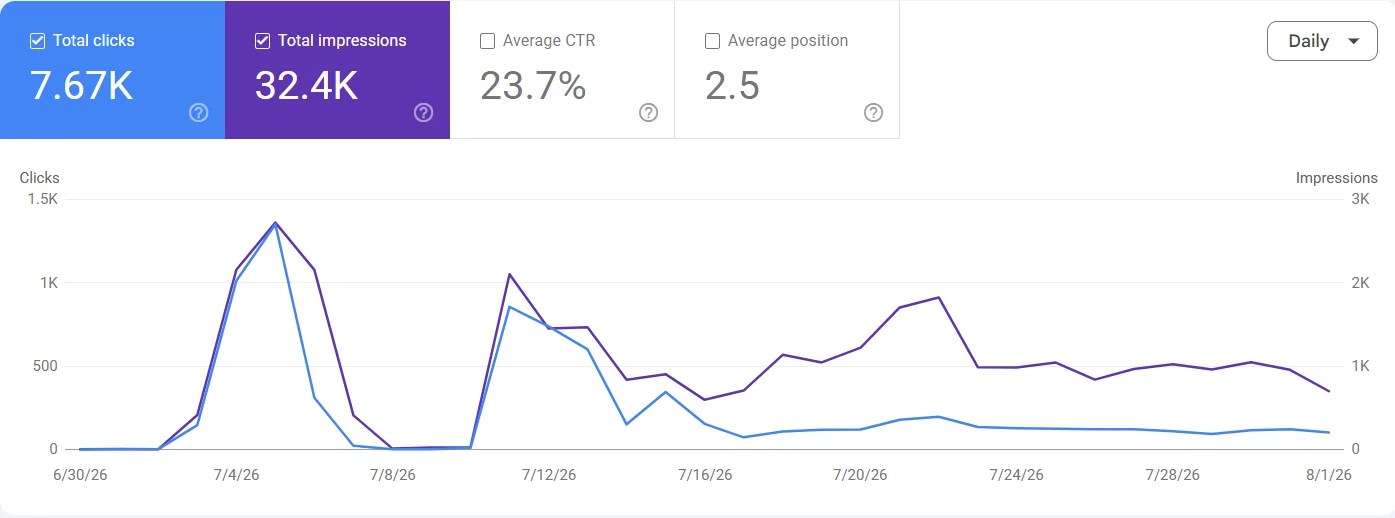
What Happened
| Factor | Details |
|---|---|
| Year | 2026 |
| Domain Type | PMD (Partial Match Domain) |
| Target Keyword | Targeted a keyword using a partial match domain. |
| Backlinks | Built 1 high-quality backlink after launching the site. |
| Time Before Google Impressions | Google began showing impressions and first-page rankings within a few days of launching the website. |
| Time Before Clicks | Clicks started arriving shortly after the site began appearing on the first page for the target keyword. |
| Current Status | The website is still being optimized and additional authority is being built to improve rankings, increase visibility, and gain more organic traffic from the search results. |
Summary
- Launch Date: June 30, 2026
- Domain: Partial Match Domain (PMD)
- Backlinks: 1 quality backlink
- Ranking Speed: Reached Google’s first page within a few days of launch.
- Current Goal: Continue building authority and improving SEO to secure higher rankings and attract more impressions and clicks.
Case Study 2
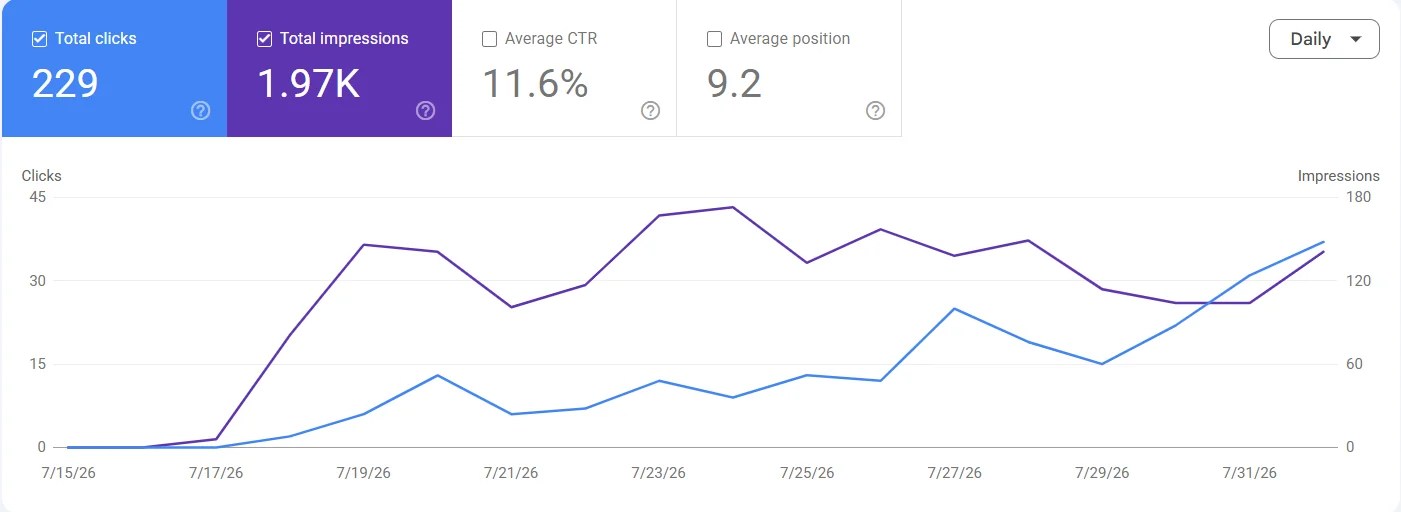
What Happened
| Factor | Details |
|---|---|
| Year | 2026 |
| Domain Type | PMD (Partial Match Domain) |
| Target Keyword | A keyword closely related to the domain name was targeted using a partial match domain strategy. |
| Backlinks | Built 1 high-quality backlink to strengthen the site’s authority. |
| Time Before Google Impressions | Google began showing impressions within a few days of launching the website. |
| Time Before Clicks | The site started receiving clicks shortly after it appeared on the first page of Google. |
| Current Status | The website is still being optimized with ongoing SEO efforts to improve rankings, increase authority, and gain more impressions and clicks from the search engine results pages (SERPs). |
Summary
- Launch Date: July 16, 2026
- Year: 2026
- Domain Type: Partial Match Domain (PMD)
- Backlinks: 1 quality backlink
- Ranking Speed: Reached Google’s first page within a few days of launch.
- Current Goal: Continue building authority and optimizing the site to climb higher in the rankings and attract more organic traffic.
Case Study 3
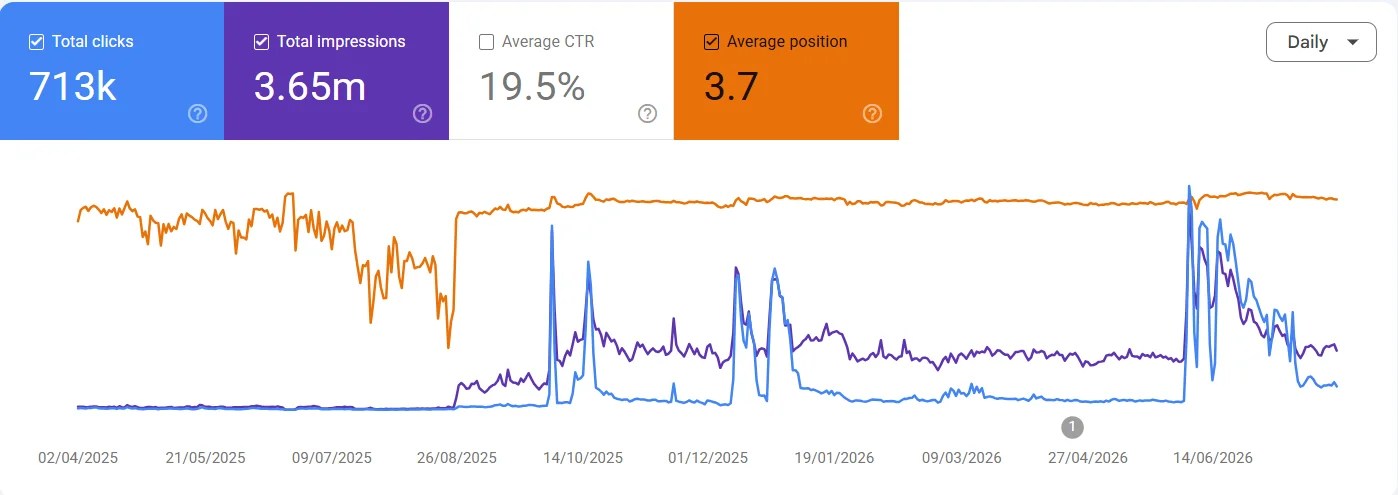

What Happened
| Factor | Details |
|---|---|
| Year | 2024 |
| Domain Type | PMD (Partial Match Domain) |
| Target Keyword | A keyword closely related to the domain name was targeted using a partial match domain strategy. |
| Backlinks | Built 10+ quality backlinks over time to improve the site’s authority. |
| Time Before Google Impressions | The website started gaining noticeable traction on Google about one year after launch. |
| Time Before Clicks | Clicks increased as the site gained visibility and rankings approximately one year after it was launched. |
| Current Status | The website continues to grow in search visibility as its authority increases through ongoing SEO efforts and backlink building. |
Summary
- Launch Date: August 15, 2024
- Year: 2024
- Domain Type: Partial Match Domain (PMD)
- Backlinks: 10+ quality backlinks
- Ranking Speed: Began gaining meaningful traction on Google approximately one year after launch.
- Current Goal: Continue strengthening the site’s authority and improving rankings to increase organic impressions, clicks, and overall SERP performance.
Case Study 4
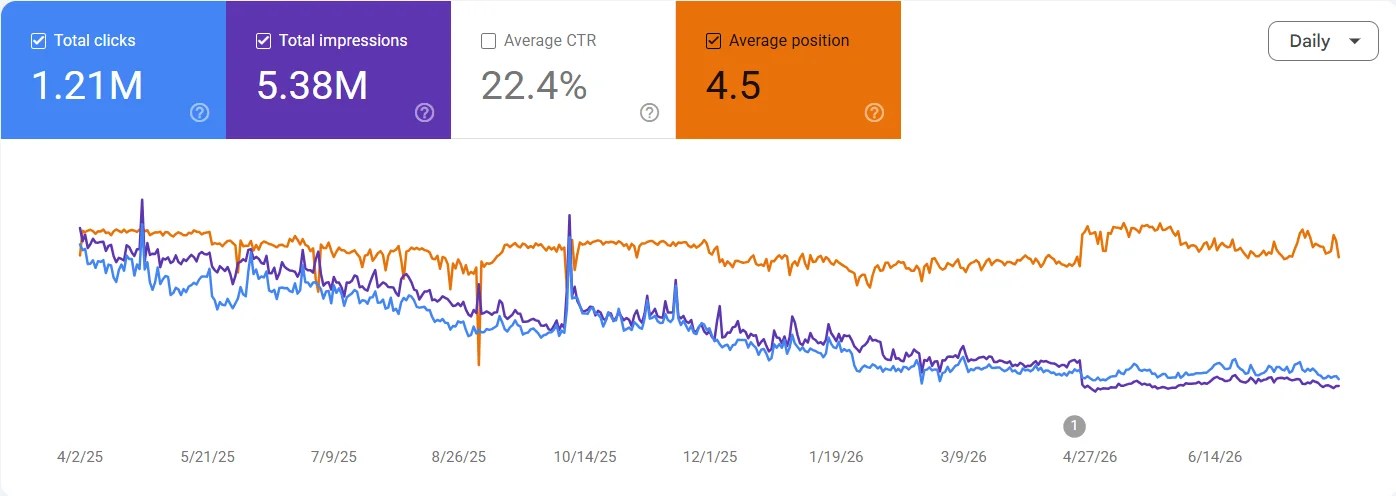

What Happened
| Factor | Details |
|---|---|
| Year | 2019 |
| Domain Type | EMD (Exact Match Domain) |
| Target Keyword | An exact-match keyword was used as the domain name, targeting the primary search term directly. |
| Backlinks | Built 8+ quality backlinks over time to strengthen the site’s authority. |
| Time Before Google Impressions | The website started gaining meaningful traction on Google more than one year after launch. |
| Time Before Clicks | Clicks increased as the site gained visibility and rankings over a year after it was launched. |
| Current Status | The website has remained resilient, surviving multiple Google algorithm updates while continuing to receive organic traffic. Historical data from the free version of Jetpack shows only 5 recorded views, but this significantly underrepresents the site’s actual traffic over the years, particularly by 2026, due to the limitations of the free Jetpack statistics. |
Summary
- Launch Date: November 30, 2019
- Year: 2019
- Domain Type: Exact Match Domain (EMD)
- Backlinks: 8+ quality backlinks
- Ranking Speed: Began gaining meaningful traction on Google more than one year after launch.
- Current Performance: Has survived numerous Google algorithm updates and continues to attract organic traffic.
- Analytics Note: The free Jetpack statistics show only 5 historical views, but this does not reflect the site’s true lifetime traffic. By 2026, the site had accumulated substantially more visits than the free Jetpack data indicates.
Case Study 5
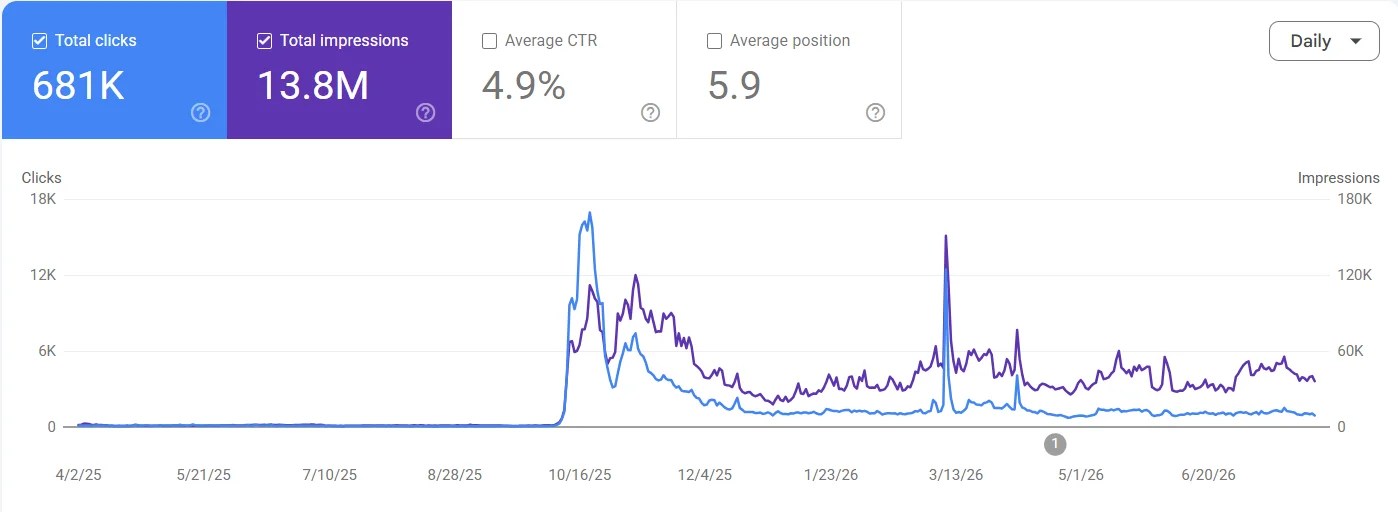

What Happened
| Factor | Details |
|---|---|
| Year | 2023 |
| Domain Type | PMD (Partial Match Domain) |
| Target Keyword | A keyword closely related to the domain name was targeted using a partial match domain strategy. |
| Backlinks | Built 8+ quality backlinks to improve the site’s authority and search visibility. |
| Time Before Google Impressions | The website started gaining noticeable traction on Google more than one year after launch. |
| Time Before Clicks | Clicks increased as the site gained higher rankings and visibility over a year after it was launched. |
| Current Status | The website has remained stable through multiple Google algorithm updates and continues to build organic visibility. Ongoing SEO efforts are focused on strengthening authority, improving rankings, and increasing impressions and clicks from the search engine results pages (SERPs). |
Summary
- Launch Date: October 16, 2023
- Year: 2023
- Domain Type: Partial Match Domain (PMD)
- Backlinks: 8+ quality backlinks
- Ranking Speed: Began gaining meaningful traction on Google more than one year after launch.
- Current Performance: Has successfully survived numerous Google algorithm updates and continues to grow its organic search presence through ongoing optimization.
EMD vs PMD vs Brand Domain
| Feature | Exact Match Domain | Partial Match Domain | Brand Domain |
|---|---|---|---|
| Keyword relevance | Excellent | Good | None initially |
| Google’s initial understanding | Very high | Moderate | Low |
| Branding potential | Low | Moderate | Excellent |
| Memorability | Moderate | Moderate | High |
| Long-term scalability | Limited | Better | Best |
| Speed in low-competition niches | Often fastest | Good | Usually slower |
Does Google Penalize Exact Match Domains?
One of the biggest myths in SEO is that Google “killed” Exact Match Domains.
That’s not what happened.
In 2012, Google rolled out the Exact Match Domain Update. The purpose wasn’t to eliminate EMDs—it was to stop low-quality websites from ranking simply because of their domain name.
Before the update, it was common to see thin websites with little useful content rank well if they owned an exact keyword domain.
After the update, Google became much better at distinguishing between:
- High-quality EMDs that genuinely help users.
- Low-quality EMDs created only to exploit keywords.
Today, an Exact Match Domain alone won’t carry a poor website to the top. But when combined with quality content, good site structure, and a satisfying user experience, it can still provide a meaningful advantage.
Building an Exact Match Domain Website
- Research low-competition keywords.
- Check search intent.
- Register the Exact Match Domain.
- Create topical silos.
- Publish helpful content.
- Optimize internal links.
- Submit the site to Google Search Console.
- Monitor rankings.
- Build only relevant backlinks if needed.
Common Mistakes
Avoid these pitfalls:
- Buying an EMD for a highly competitive keyword and expecting instant rankings.
- Publishing thin or AI-generated content without adding value.
- Ignoring search intent.
- Neglecting internal linking.
- Stuffing keywords unnaturally into every page.
- Expecting the domain name alone to do all the work.
An Exact Match Domain is a head start, not a substitute for quality SEO.
Final Thoughts
Exact Match Domains are not a magic ranking button.
Google still evaluates content quality, user satisfaction, technical SEO, backlinks, and many other signals.
However, an EMD can shorten the journey by giving Google an immediate and accurate understanding of your website’s topic. In niches with lower competition especially when combined with strong topical coverage and a well-structured site that early relevance can translate into faster visibility and rankings.
The real advantage isn’t that Google “rewards” Exact Match Domains. It’s that they align the domain, the content, and the user’s search intent from the very beginning.
When used strategically, an Exact Match Domain can be one of the most effective shortcuts to building topical relevance in search.